Patrick Whelan: Hi, I'm Patrick Whelan, the global head of Fixed Income Digital Markets at JP Morgan. I'm delighted to be joined today by Andrew Cole, who is the platform product manager for JP Morgan Markets Execute. Thanks for joining me today, Andrew. Maybe you can start us off by telling us a little bit about your career journey through JP Morgan, how you ended up today as we like to call it the chief product officer for Execute.
Andrew Cole: So I joined JP Morgan 2010 in technology. I did 18 months in a support role, most clamorously delivering hard tokens to clients in the FX business. I spent 18 months in credit risk and then I got hired into what was then called the eCommerce team, working as a subsidiary on the trading desk, helping with price distribution. I started to get involved in the Execute platform. I covered our FX Algos business, moved to New York, and then over time grew the role to being overseeing all of our Execute products as it pertains to the clients, internal traders and salespeople at JP.
Patrick Whelan: What's it been like? What's the piece you're most proud of?
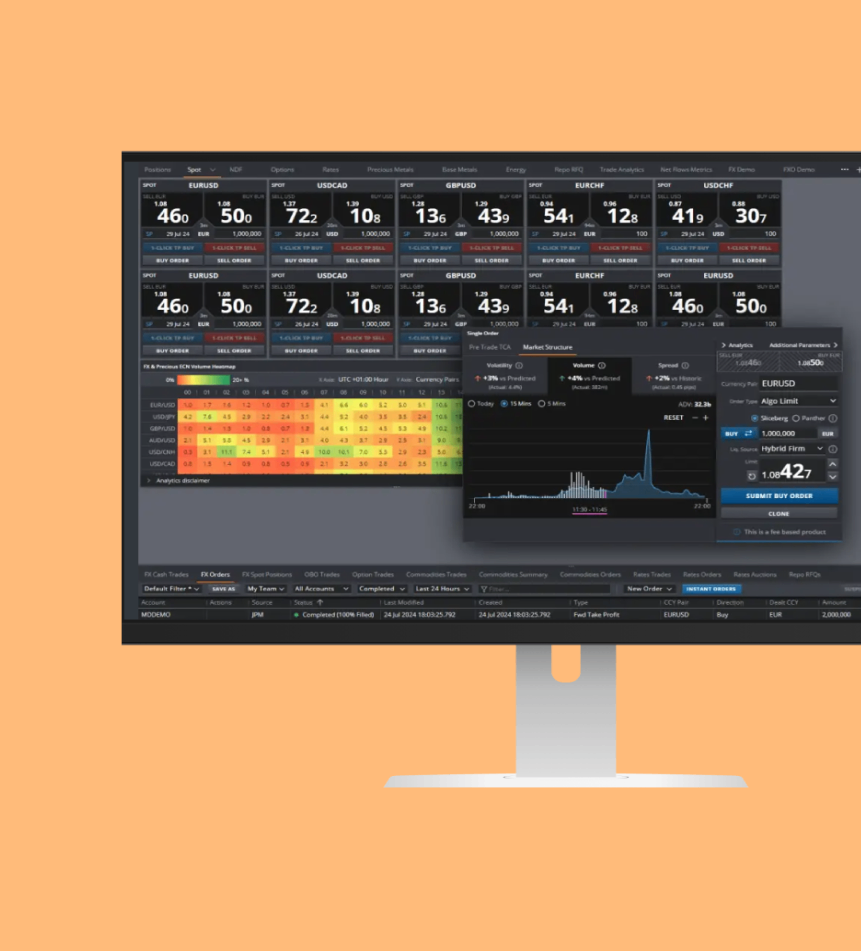
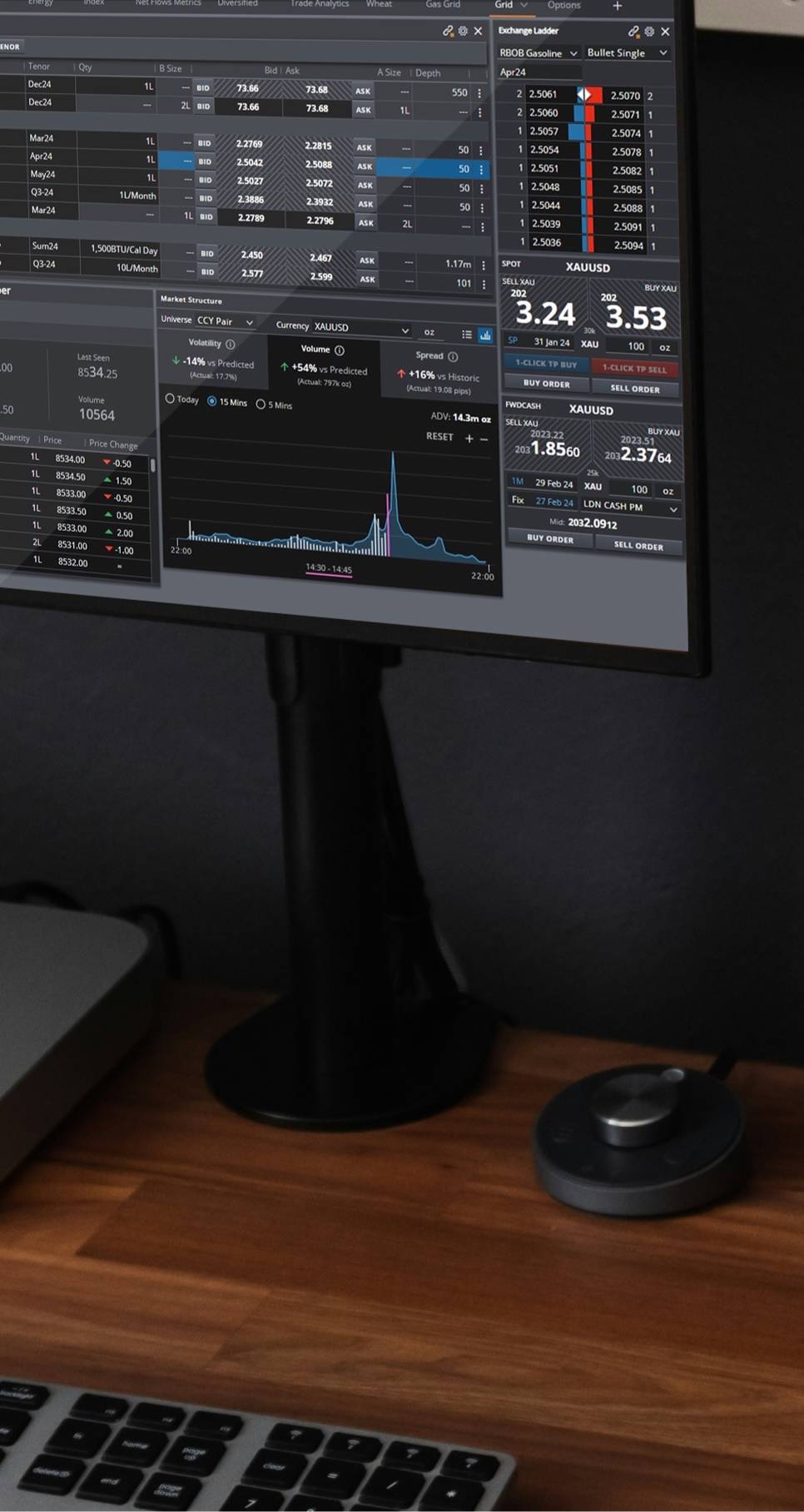
Andrew Cole: That's a good question. I think the evolution has been really exciting. I think when I look across the products that we now have and the way in which we attacked growing the platform or tried to grow the platform, we have learned from some of the things that did and didn't work. Obviously, the engine room of the product is the FX franchise where we have thousands of users, but building something from nothing to that is obviously challenging. And I think the thing I could say I'm most proud of is showing or is figuring out the different hacks to making a business grow on the platform. So if you take something like commodities where we have a huge range of different products and a massive, therefore range of different workflows, we've had to figure out how to scale a technology solution to be very flexible.
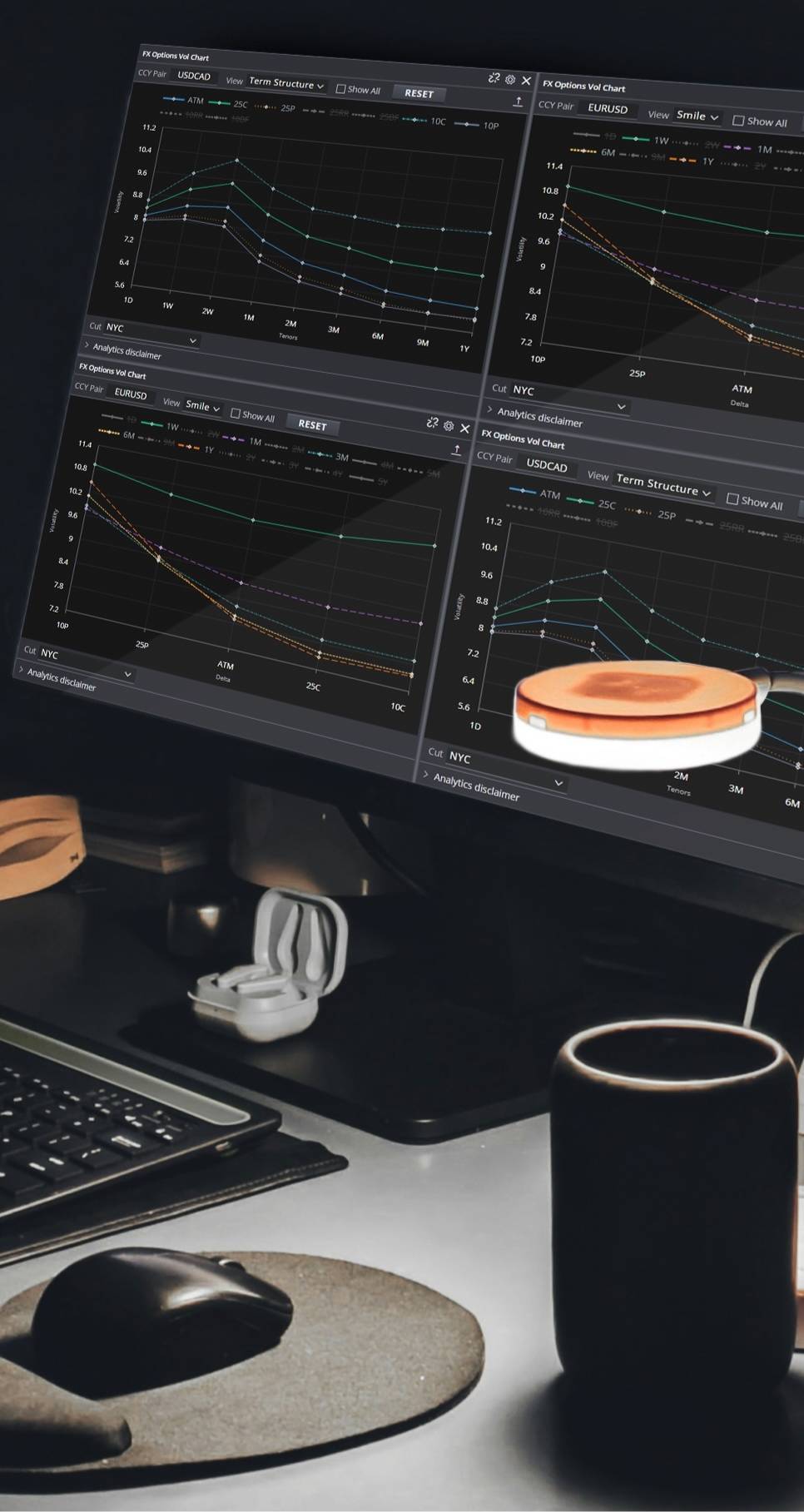
The commodities tickets on the platform cover milk, metals, gold, everything in between. So building tickets and infrastructure that supports such complexity and variation is hard and is ultimately what's enabled us to scale that business. If you look at something like FX Options where there is a significant amount of complexity to the tickets themselves, figuring out how you scale that is again a challenge. And then onto the distribution side, as well as figuring out a technique for providing technology solutions that allow very flexible tickets and very flexible workflows, you also have to figure out a fairly flexible way in which you manage to appeal to different client segments and to distribute your products. So I think the thing that I'd say I'm most proud of is Execute is a single bank platform for providing execution to sales, internal trading and directly to clients. But the ways in which we do that are really manifestly different depending on the client segment you're going after or the product you're trying to bring them onto.
Patrick Whelan: Look, you've talked a lot there about building scale into solutions that ultimately are developed by a reasonably small number of people. And obviously it's a strong collaboration between our technology teams, our product team, our design teams, and everybody else in between to help develop these solutions. But I think when you talk about the growth and actually getting more clients to use single dealer offering, I think it's interesting to see how the solutions you've built for FX and commodities and how they've been adopted by credit and rates and some of the product and asset classes, they're not necessarily complete in their electronic journey.
I suppose from your perspective, and we've talked about this a bunch of times in the past around platform growth. And if you're in an industry or in a company that is predominantly like a FinTech that's out there today, their entire journey is based on users using the platform, capturing revenues via fees or other commercial models. Obviously for single dealer platform, it's a bit different, but how do you look at the kind of growth profile? How do you set objectives for your team in general? How do you make sure that clients want to come on board?
Andrew Cole: So I think one of the things you said there around the differences between the LOBs, in our management, we often talk about the concept of a platform and building something that as a platform can scale across the pieces within it. And one of the things that's been quite satisfying about taking a role like this where we have a broad range of asset classes that's continually growing is identifying those commonalities between the different user journeys and trying to find ways to scale out and abstract some of those pathways that users are going along so that something you build in FX can scale into rates credit. I think in the beginning of XQ, and again, one of the things that we've started to do is trying to break down the line of business silos. So where you have rates, credit FX, we used to build separate sets of components for each.
We're increasingly trying to combine them. And when you ask about objectives for the team and how we manage that, it's hard because if you're someone that lives and breathes in credit or rates, it's hard for you to appreciate that the journeys that your users are going on and the things that they need are similar between LOBs. You like to think there's a uniqueness to what your users want.
Patrick Whelan: Everyone's special.
Andrew Cole: Yeah, exactly. Some specificities to your product. So when we're setting objectives with the team, we sort of divide ourselves between a core platform group that build these abstracted components that every LOB can leverage, and then you have your line of business specialists and setting objectives so that those two groups can partner and work well together. It's been hard because it is a different model to what we've had in the past. So I think that's definitely something where we've been focused.
Patrick Whelan: I suppose when part of that journey is client's desire for customization in terms of what they want and ultimately we're generally fueled by ideas from their side and how we can actually solve problems from a client's perspective. How do you balance the customization versus what you spoke about about the need for common components across each of these areas?
Andrew Cole: Yeah, it's a great question. And I think it's the main dissenting voice when we started on this journey was the fact that, oh, but what about user ABC wants to customize? One of the ways that we attract users is through offering those custom solutions. Lots of the customization that we do is in the backend and I think a lot of the success of the platform is working tightly with design to figure out how a user can feel that the user journey they're on is customized to them, but doesn't actually involve doing things very differently. Customization is mostly about ease of use. And if you work well with your design function, your user research function, which is what we try to do, you tend to find that you can build solutions that scale even if the user journey that the user is on isn't so different.
So I think for that, yeah, mostly our customization process involves AB testing. We make a lot of use of the fact that sales and trading internally use the same platform as our clients. So by getting them onto a prototype that our design team have built, AB testing that design, prototyping it, that's how we can inform the way in which we build out our tickets. And in so doing, try to avoid a client coming in and saying, "This doesn't work for me. I need that." We just try to make it so that it should scale out. But it is a challenge. And if a big name comes in and asks for something, one of the powers of what we've done with the way we've built the platform is it should be flexible enough that we can accommodate those requests when they arrive.
Patrick Whelan: Look, I'm fascinated by great design and how simple something can be when designed properly and how immediately user-friendly it can be and how quick it can be adopted, but it takes a lot of effort to make great designs into reality. And I think, as you said, that partnership between design, UX, user research and our engineering teams is critical to some of that, to those functions coming out the way they are and being adopted so quickly by our clients. I think as well, like you touched upon it as well, there's benefit from the fact that some of these components are so reusable and that we can quickly go into a new asset class and start streaming prices and grids to clients quickly.
Or when it comes to analytics, being able to design visual representations that can be used again across asset classes for clients to be able to quickly visualize some of the trends they're seeing, whether that's the net flows that we see across certain areas where we have aggregated a bunch of our flows internally and are able to display those to clients to see what is happening across the market more broadly, obviously anonymized and aggregated, as well as in other areas. And I suppose when it comes to some of those components and some of those design features, how do you and the team look at it and how do you actually build those solutions out for clients? How much of the client journey is theirs and how much of it is ours?
Andrew Cole: I think analytics is another area I think we can say we're particularly proud of. Sales and clients started to talk about the importance of data and distributed data. And when you look at the way that JPMorgan's distributed that data, I think we've done a really excellent job of building out products like data query and some of the other products, Fusion within the JPMM family. But I think one of the areas that we had historically been less focused was on trading analytics and point of time execution analytics. And I think that all started for us with the Algos realtime TCA. So we built out those products. And to your question in terms of the workflow, it became quite seamless because as the client was placing the algo, the analytic would pop up and they'd have it available to them in the tool. I think that as we've grown from there, we added net flows, we added market structure, commentary, et cetera.
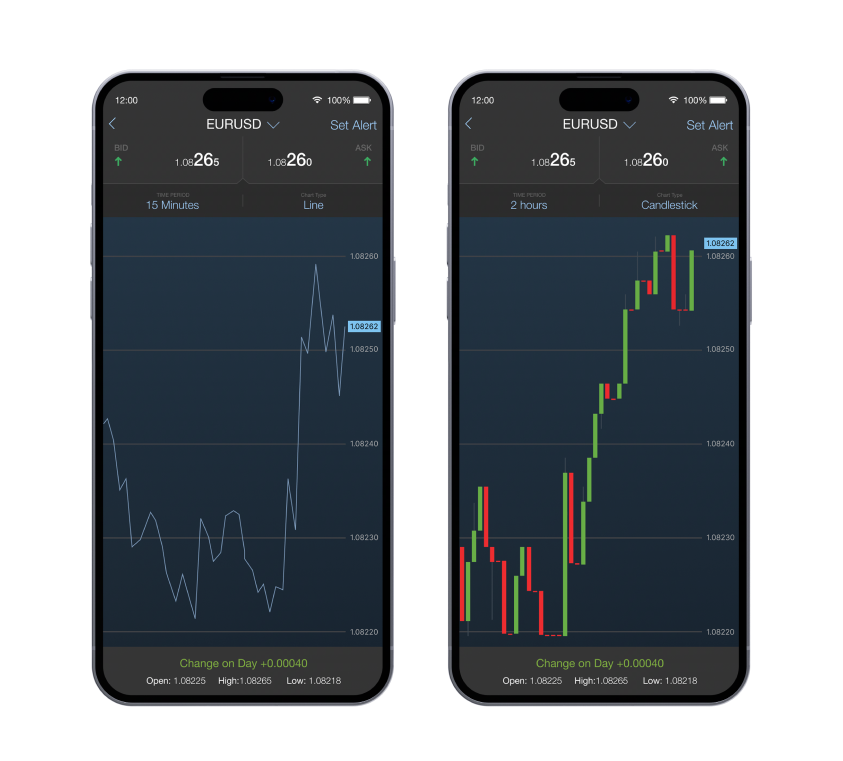
And now what we're trying to provide to a trader or to a user is all of the data that they could hope to get from their sales coverage in one place in an interactive format where they can tweak it, customize it, select what they want more of, less of, et cetera. And the magic of what we've done there is we obviously have our single bank platform, which you can download. We also have some of those analytics creeping onto our mobile device, but the app that we offer is obviously the secret sauce there because clients can log into that app, it's embedded in the terminals where they already trade. So it becomes more seamlessly part of their workflow. It's in night mode, so it looks like the rest of the platform around it.
We've tried to just build out from there. And the good thing about analytics is that we increasingly see it as a gateway to execution. So a lot of the clients that log in to monitor our axes or see our streaming data will then say, "Oh, can I execute on that data?" And that's a great conversation to be having because that's exactly what we want to be doing, is providing them data that triggers a decision to trade or a realization that there's something there that they hadn't noticed and therefore they want to trade on it.
Patrick Whelan: It was super interesting during the recent boat of volatility during Liberation Day and the subsequent days afterwards to see our clients embrace the analytics, especially around those periods. Obviously the execution days, we had record volumes as well. And so again, being able to see the platform stand up to the heaviest barrage of client users as well as the volumes traded was great to see. But equally to see them embracing things that we had developed with that in mind and being able to say, okay, what really matters real time is different to what potentially you want to look at over a time series in a historical basis and that you want to be able to do some research on when it comes to, as you said, execution, you want to be as up-to-date as you possibly can.
And so to see the uplift in users around that time was certainly impressive. And I think that's just given us more fuel to go and build out more solutions that I think will drive more of that. It also helps us with, we obviously have a single dealer platform, but we also provide API connectivity to the client bases that don't necessarily want to use our single dealer platform for different reasons or have built their own and want to aggregate the information directly in their own EMS or OMS. And obviously it makes sense for them to connect with us directly via API in those instances.
But again, the common componentry behind the scenes make it easier for us to stream that market data to give them the relevant analytics differentiated where they need it at the point of trade, point of execution when they're getting to that point when the execution really matters. So again, the solutions are common. The work behind the scenes is about making sure that they are seamless and ultimately are where clients need them when they need them. So a lot more to go on that front, but I suppose from your perspective in terms of the platform and where it is right now, what's next?
Andrew Cole: So I think just to take back to one of the things you said, like a daylight volatility, the volatility [inaudible 00:13:48] is great because it's a reward for all the effort we put in to scale the platform, to make it cope with that increased load. It then sets a new high bar in terms of what we have to achieve the next time. So it's a massive kudos to all of the technology teams are involved from the backend infrastructure right through to the front end that they work so hard to make things like that work. Because when you have crashes or when you have stability issues, not that we have so many of them anymore, we are aware of them and we were obviously always stress testing the platform when it all comes together in a period of volatility like that is obviously hugely rewarding. So I'm very grateful to the teams that work to make that possible.
I think as we look forward, look, we are always looking for new products, new areas to get into. Looking forward, I definitely see more complicated products as an area of opportunity, both because clients, as we see it, value the ability to input the product correctly and accurately, significantly more than anything else when it comes to that sort of execution. So when we look at the electronification of FX Options, we see that in the third generation exotics, that the most complicated products, the percentage done electronically is far higher because the client likes the comfort that they get from entering themselves, seeing the parameters that they want to select, not going through in a chat and explaining in mega detail how that product needs to be structured for them. And as we get into list products and derivatives in any asset class, we have a new range of tools from the technology side at JP Morgan that makes scaling and distributing those products more easy. And we see the demand from the client to be able to get their hands on a solution that allows them to communicate it accurately.
So I think the future for us definitely looks like a derivatives led offering will be something that will definitely resonate with our user base. We also think as the product complexity increases, the risk increases. And we've seen recently with some of the technology vendors in this space that they struggle to manage the product complexity well, they struggle to synergize the different ways in which different banks have managed to communicate and distribute these products. And also there's the risk element. When you're communicating a product between a client and a bank as a middle agent and there's 30, 50 plus parameters that you need to configure, the chances that something goes wrong is heightened. And so for us being able to say, "This is our platform, we have the ability to flexibly add the fields to customize the ticket to your requirements." That gives us an edge and we believe that as electronification moves from the simpler to the more complex products, that edge will do us well. So I think for me, the future is investing in that area.
Patrick Whelan: I mean, you've touched upon it there in terms of like, it's one part of it is building it for clients and building a solution that obviously works for them. I suppose the other part of our day job is building solutions that work for sales and trading. And ultimately our first clients in a lot of instances are our sales partners and they have to book all forms of products. And so it isn't necessarily ones that have been through the electronic journey, but the reality is we do have to create solutions for them as well. I suppose in terms of the offerings and the differences that come about as a result of that, how do you build solutions both for sales and for clients in one platform and make sure that it's seamless both for our internal and external users?
Andrew Cole: It's one of the things that whilst it's very hard to do, it's really important that we get it right. We talked a bit before about the value we get from internal users, AB testing. We massively value ourselves and trading partners for being the guinea pigs on our tools. We can proudly go out to clients and tell them that this is a tool our internal users are using. When I worked just on the Algos suite, the fact that our Algos are used both by our internal traders and our clients means that all of the feedback comes back to us from the internal desks and it also lends some credibility to the product that you're offering that is good enough for our internal users to be using. So whilst it's hard and we can come onto how we manage it, the reward of it is that you can AB test it, you do find risk issues quicker, you can collect more readily available feedback.
So we do massively value that partnership. In terms of how we do it, the underlying workflows tend to be fairly similar. At the end of the day, if you're a salesperson booking on behalf of a client, you're effectively entering in a lot of the same fields that a client would be. There's obviously a lot of regulatory and credit checks, et cetera, that are done by the salesperson, and so we need to build all of that functionality in, but providing a common entry point and a common set of components is, that's part of the journey of building in a customizable and design led way.
Patrick Whelan: We had a lot of success in areas like fixed income financing in the repo space with that, I suppose. It's been great to see that journey for both sales and for clients happening almost in tandem.
Andrew Cole: Yeah, exactly.
Patrick Whelan: It's getting it out in front of our sales partners, getting them comfortable with the workflows, understanding that there will be issues. And we'd rather discover those issues internally first, fix them, rapidly deploy the bug fixes so that we can actually get the solution to where we need it to. But at the same time, bring clients on that journey with us so that you're not necessarily just building it for sales. You're also building it with clients in mind and you're able to have that conversation both with sales and clients at the same time so that when we are having those design discussions and looking at what the solutions need to be able to handle, then you're able to bring in both sides of the client and the user journey into it.
Andrew Cole: And just to add to that, the idea that our salespeople are out selling the product that they're using, it also all feeds back in, because if it's-
Patrick Whelan: Yeah, exactly. Exactly. They know what they're talking.
Andrew Cole: Yeah, yeah, exactly.
Patrick Whelan: And so we have a lot of salespeople which is good, but at the same time trying to roll it out all over the world is also, it's a scaling problem at times. But I think we're doing a lot better at that too, but it's a continuous work in progress, I think, on that front.
Andrew Cole: So a question for you now, SPG has been something new for us. It's a business that we've not looked at on Execute before and things are starting to click there and go pretty well. Tell me a little bit about how that all got started and how the team came together to make that possible.
Patrick Whelan: Absolutely. I mean, you've touched upon it already in terms of some of the more complex products looking to provide single dealer solutions to their client base, and it is a different client base. In a lot of cases, I think when we looked at Execute in FX and commodities, there was a lot of banks, hedge funds and corporates that were the predominant client base that we focused on and that were early adopters of the platform. SPG is a different market altogether. And I think the clients that have been part of that journey with us have been looking for solutions that ultimately a single dealer platform can provide better than potentially even some of the multi-dealer platforms. Some of it is because of the way the market operates today and BWIC and OWIC, which are bids wanted in competition, offers wanted in competition, is a feature of voice trading that has been around for decades.
And I think everybody was looking for the efficiency that the BWIC, OWIC offerings can bring by aggregating some of that information on a single dealer platform, providing our liquidity alongside the liquidity of our clients on the other side, gives the client who's been who was asking for the BWIC or the OWC in the first interest, the reach of our vast client network, but it equally gives them the efficiency of a digital channel to be able to handle that, which ultimately from an SDP perspective and for some of the other pieces is part of the efficiencies that they're looking to get from a workflow perspective. But equally, they get the pricing and liquidity access to the broad reach of JP Morgan, which is always helpful. And it's just the beginning. So parts of SPG and the TBA market and spec pools have been part of the electronic journey in some cases, but mortgages and some of the broader areas across SPG definitely haven't necessarily gone down that road just yet, but they're certainly headed in some ways towards that.
And providing a single dealer solution, considering the size and scale of our market share in that, as well as our offering in terms of pricing and liquidity and the depth of our risk management within that area, it's always going to be a compelling offering for clients. And I think that's where we hope we can continue to grow. And obviously it's new clients to execute. It provides the opportunity for new analytics, for new offerings to be put in front of a new client base. And ultimately, the clients in SPG, they're also clients in munis and elsewhere in loans and CLOs. And so we do see more synergies across some of those other areas as we grow the footprint in SPG. So again, it's not unique to the broader discussion that you are having in terms of how we grow the platform more broadly, but I do think it is unique in that that client base is in some ways different to the ones that we've traditionally embraced.